Towing Services for Small Business Vans: A 2026 Guide

Table of Contents
Why Your Business Van Needs a Towing Plan Before It Breaks Down
Towing Services for Small Business Vans: What to Expect
Commercial Van Towing: How It Differs from Towing a Car
Weight, Size, and Equipment Considerations
Business Van Roadside Assistance: What's Covered and When to Call
Flatbed Towing for Vans: When It's the Right Choice
How to Request a Tow for Your Work Van: Step by Step
What Information to Have Ready
Choosing a Towing Provider for Your Small Business
Frequently Asked Questions
Last Updated: October 14, 2026
Why Your Business Van Needs a Towing Plan Before It Breaks Down
A van that won't start at 6 a.m. costs you the whole day's deliveries. Most small business owners only think about towing services for small business vans after the van is already dead on the shoulder. That's the wrong time to start comparing providers.
A single breakdown can snowball. One missed job leads to an angry client, a refund, and a scramble to rent a replacement. A towing plan removes the panic.
Here's what most guides get wrong: they treat a van like a car. It isn't. A loaded cargo van weighs far more, sits lower, and often can't be pulled by standard equipment.
So what does a real plan look like?
Save one towing number in every driver's phone
Know your van's weight and size before you call
Confirm your insurance covers commercial vehicles
Decide who pays: you or the client
Below, we break down exactly how commercial van towing works, what it costs in time and hassle, and how to pick a provider you can trust at 2 a.m.
Towing Services for Small Business Vans: What to Expect
When you call for towing services for small business vans, expect a provider to ask about your van's weight, load, and location before quoting. The right truck and the right gear get dispatched together.

The process usually runs in four stages:
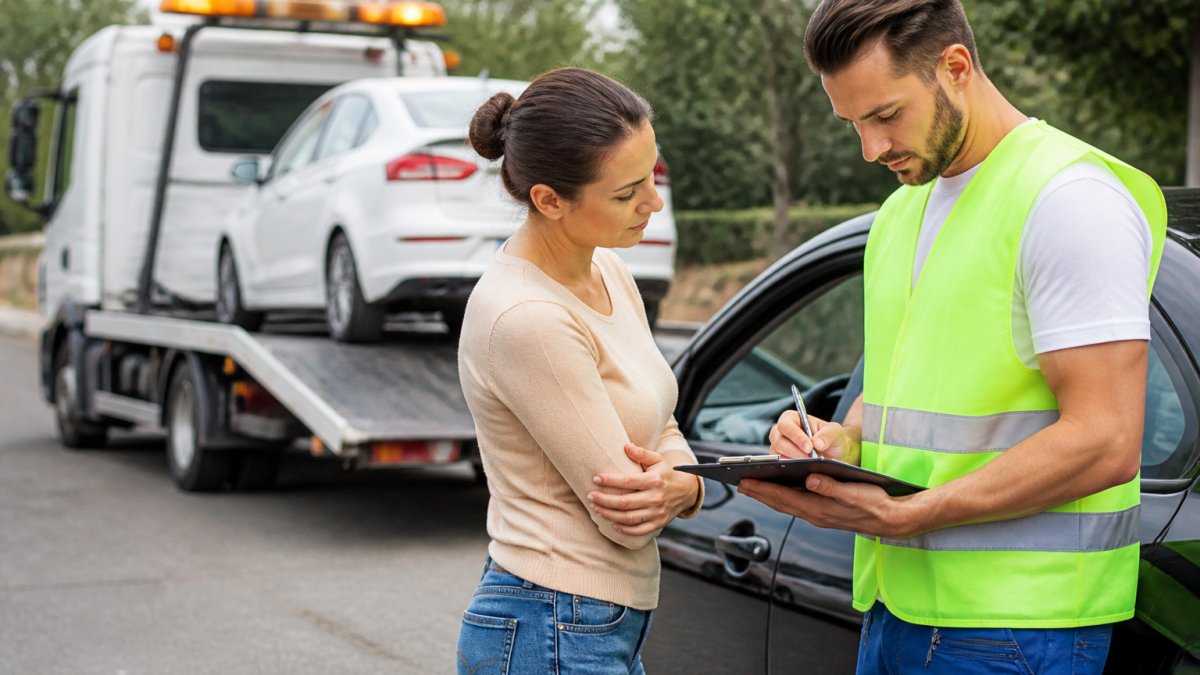
Call intake. You give your location, van type, and whether it rolls or not.
Dispatch. The operator matches a truck to your van's size and weight.
On-site assessment. The driver checks the wheels, load, and any damage.
Load and move. The van gets secured and taken to your chosen shop.
What separates a smooth tow from a nightmare is preparation. A driver who knows your van is loaded with tools won't try to drag it onto a wheel-lift.
Pro Tip Snap a photo of your van's door jamb sticker (it lists gross vehicle weight) and save it in your phone. You'll read the number off in seconds instead of hunting for the manual while traffic flies past.
Commercial Van Towing: How It Differs from Towing a Car
Commercial van towing is not just a bigger version of car towing. Vans carry more weight, sit higher, and often have cargo that shifts. Each of those changes how a tow has to be done.
A few things change the job:
Weight. A loaded cargo van can be two to three times heavier than a sedan.
Height and length. Roof racks and long wheelbases need more clearance.
Cargo. Loose tools and stock can slide or fall during a tow.
Clearance. Low bumpers and side skirts can scrape on a wheel-lift.
Weight, Size, and Equipment Considerations
Equipment has to match the van, not the other way around. A light-duty truck that handles a sedan may not safely lift a fully loaded Sprinter.
Ask the dispatcher two questions before you agree to anything:
What's the truck's weight rating?
Will you use a flatbed or a wheel-lift?
If the answer is vague, call someone else. A mismatched truck risks damage to your van, your cargo, and the driver.
Business Van Roadside Assistance: What's Covered and When to Call
Business van roadside assistance covers the problems that don't need a tow. A jump start, a lockout, a flat tire, or a fuel delivery can get you moving without a trip to the shop.
Call for roadside help when:
The battery is dead but the van is otherwise fine
You're locked out with the keys inside
A tire is flat and you have a spare
You've run out of fuel
Call for a tow when:
The van won't roll or steer safely
There's smoke, a fluid leak, or engine damage
A wheel is bent or the tire is shredded
You've been in a collision
Knowing the difference saves you money. A jump start costs far less than a tow, and it gets you back on the road faster.
Watch Out Don't let anyone tow a van with a seized wheel or locked brake using a wheel-lift. Dragging a stuck wheel can bend the rim, damage the axle, and turn a simple tow into a repair bill.
Flatbed Towing for Vans: When It's the Right Choice
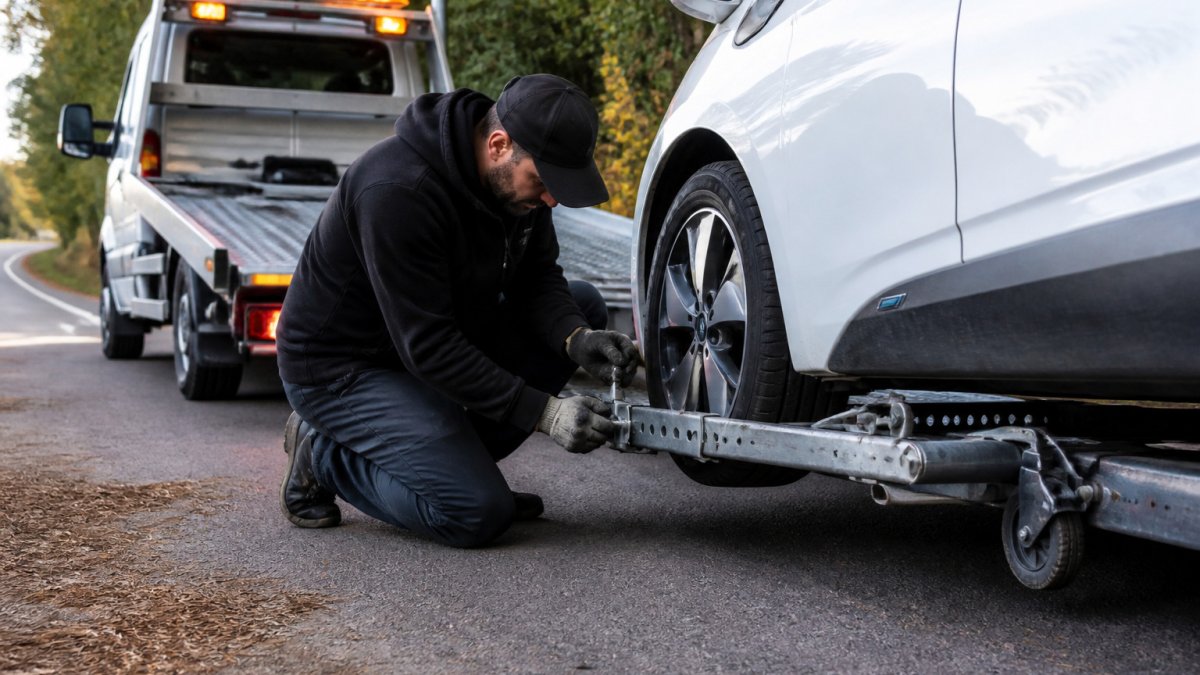
Flatbed towing for vans is the safest option in most cases. The van rides on a platform with all four wheels off the ground, so nothing drags and nothing spins.
Choose a flatbed when:
The van is all-wheel drive or four-wheel drive
A wheel is damaged or locked
The van has low ground clearance
You're moving a van with valuable cargo inside
The van was in a collision
A wheel-lift works fine for a simple, rolling breakdown on a rear-wheel-drive van. But when in doubt, ask for the flatbed. The extra care is worth it.
How to Request a Tow for Your Work Van: Step by Step
Requesting a tow takes about five minutes if you have the right details ready. The faster you can answer the dispatcher's questions, the faster a truck rolls.
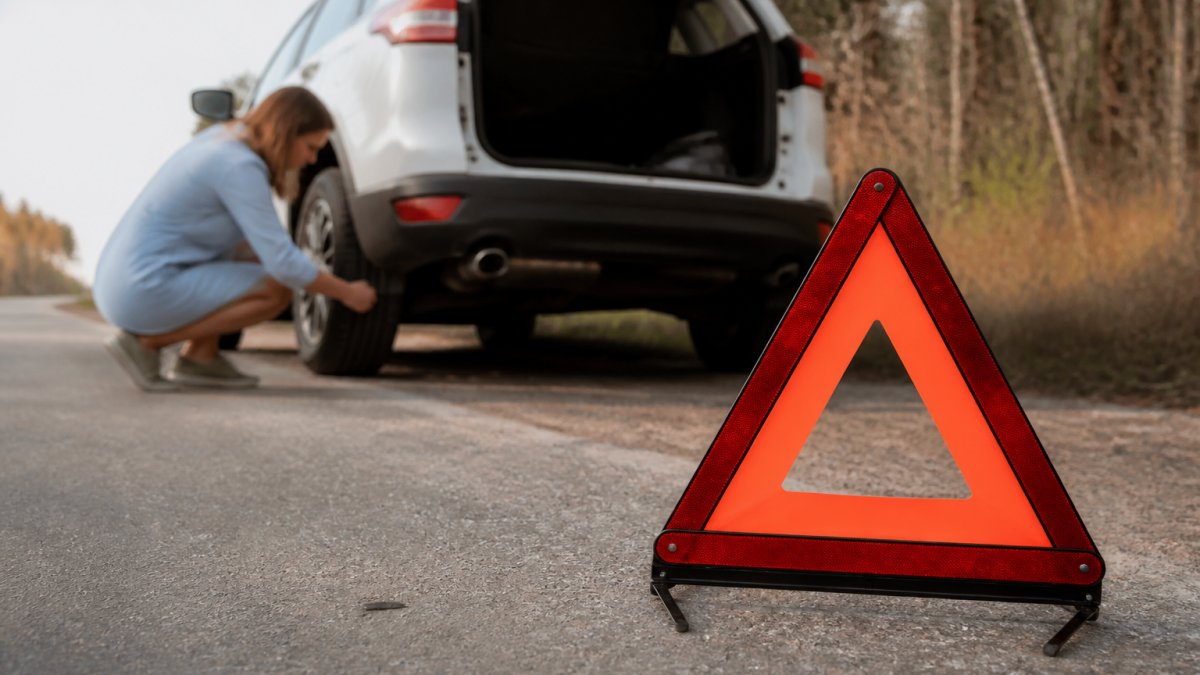
Step 1: Get to safety. Pull as far off the road as you can. Turn on your hazard lights.
Step 2: Note your location. Use a maps app to share your exact spot. "Near the highway" wastes time.
Step 3: Call your provider. State that it's a commercial van, not a car.
Step 4: Give the details. Weight, load, wheel status, and destination.
Step 5: Confirm the plan. Ask which truck is coming and the estimated arrival.
Step 6: Stay with the van. Keep your phone on and watch for the truck.
What Information to Have Ready
Have these six things ready before you dial:
Your exact location or a pin drop
Van make, model, and rough weight
Whether it rolls, steers, and brakes
What's loaded inside
Where you want it taken
Your insurance or payment details
Situation | Best Option | Why |
Dead battery, van rolls | Roadside jump start | Cheapest, fastest fix |
Flat tire, spare on hand | Roadside tire change | No tow needed |
Locked out, keys inside | Roadside lockout | Avoids a tow |
All-wheel drive, won't start | Flatbed tow | Protects the drivetrain |
Bent wheel or collision | Flatbed tow | No dragging, no damage |
Simple rolling breakdown | Wheel-lift tow | Quick and lower cost |
Choosing a Towing Provider for Your Small Business
Pick a provider you'd trust at 2 a.m. with your most expensive asset. Availability, honesty, and care matter more than a flashy ad.
Look for these signs:
Real 24/7 dispatch. Call at midnight to test it before you need it.
Clear pricing. Ask what's included and what's extra, up front.
Commercial experience. They should know vans, not just cars.
Insurance and trained drivers. Ask directly. A good operator won't dodge the question.
Local coverage. Confirm they actually serve your area.
SJ's Towing is a family-run business, and that shapes how we work. We run 24/7 and treat every van like it's our own. One of our customers put it simply after a breakdown far from home: "Our van broke down in the middle of nowhere. They got a truck out fast!"
That's the standard you should expect from any provider you call.
Frequently Asked Questions
What should a small business look for in a van towing service?
Look for a provider that handles commercial vans specifically, not just passenger cars. Ask about their response time, whether they use flatbed towing for vans, and if they operate 24/7. Confirm they have insurance and trained drivers who know how to secure a loaded work van without damage. Also check if they offer business van roadside assistance like jump-starts or tire changes, which can get you moving without a full tow.
How do I know if my van needs a flatbed tow?
Flatbed towing for vans is usually the safest option when your van has all-wheel drive, low ground clearance, or damage to the wheels or suspension. If the van won't roll freely or the steering is locked, a flatbed prevents further damage. For simple breakdowns like a dead battery or flat tire, a wheel-lift tow may work, but ask the dispatcher to confirm based on your van's make and model.
Does commercial vehicle insurance cover towing?
Many commercial auto policies in Ontario include some roadside assistance or towing coverage, but limits vary widely. Check your policy or call your insurer to see what's covered for your business van. Some policies reimburse you up to a set amount per tow, while others require you to use a specific provider. Keep receipts and note the date, time, and reason for the tow when you submit a claim.
How can a small business reduce downtime after a van breakdown?
Save a reliable towing provider's number in your phone and your team's phones before you need it. Keep your van's registration, insurance, and roadside assistance details in the glovebox. When you call, give the dispatcher your exact location, van type, and whether it's loaded. A provider that offers 24/7 commercial van towing can get you back on the road faster, and some can tow directly to your preferred repair shop.
A breakdown never picks a good time, and a van full of tools or stock makes it worse. You need a towing partner who answers at 2 a.m., quotes honestly, and handles your van with care. SJ's Towing offers 24/7 dispatch, friendly and professional drivers, and affordable rates across the region. Get a quote from SJ's Towing today and keep your business moving.
GET A QUOTE
Comments