Emergency Towing Service in Oakville: 7 Steps to Get Help

Table of Contents
Step 1: Get to Safety Before You Call for Emergency Towing
Step 2: Know What Information to Give Dispatch
Step 3: Understand Towing Cost per Kilometer in Ontario
Step 4: Choose the Right Truck for Your Vehicle Type
Step 5: Accident Towing Procedures After a Collision
Step 6: Rely on 24/7 Roadside Assistance in Oakville
Step 7: Know What to Expect While You Wait
Conclusion: Get Emergency Towing Service in Oakville Without the Guesswork
Frequently Asked Questions
Last Updated: October 16, 2026
Step 1: Get to Safety Before You Call for Emergency Towing
The first move after a breakdown is not reaching for your phone. It is getting yourself and your passengers out of live traffic.
Work through this order:
Steer onto the right shoulder or an emergency pull-off. On a 400-series highway, aim for the far side of the shoulder, away from the lane.
Turn on your four-way flashers immediately, day or night.
Set the parking brake and leave the transmission in Park. For a manual, leave it in first or reverse.
Exit through the passenger side if you are on a highway. Traffic-side doors are where people get clipped.
Stand behind the guardrail or well off the shoulder, never in front of or behind your vehicle.
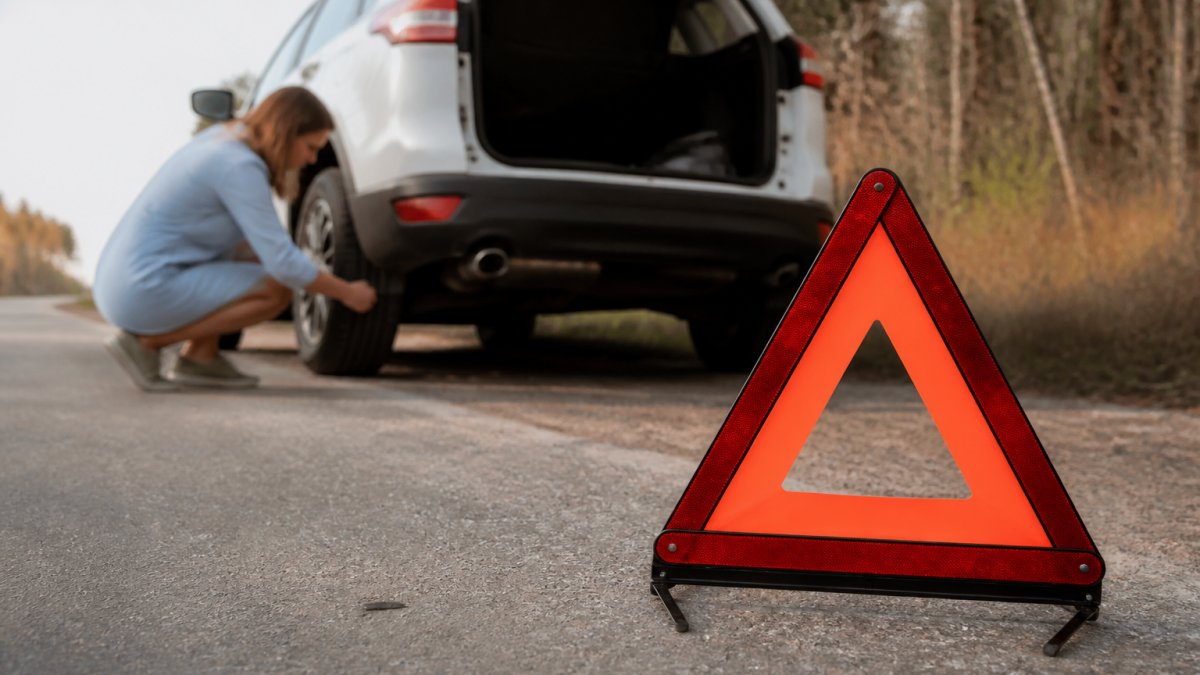
If you carry a warning triangle, place it only if it is genuinely safe to walk back. On a busy highway, skip it.
If you cannot move the vehicle at all, stay buckled with hazards on and call 911 first. A disabled car sitting in a live lane is a police matter before it is a towing matter.

Step 2: Know What Information to Give Dispatch
A dispatcher can only send the right truck to the right place if you hand over six details in one call. Have them ready before you dial, because fumbling for your location wastes the minutes that matter.
Here is what to give dispatch:
Your exact location. Highway, direction of travel, nearest exit or kilometre marker, and any landmark. "QEW westbound, just past the Bronte Road exit" beats "somewhere near Oakville."
Vehicle type and condition. Make, model, and whether the car rolls, steers, or is locked in Park.
What went wrong. Flat tire, dead battery, collision damage, or a mechanical failure.
Where you want it taken. A specific garage, dealership, or your home address.
Your phone number and name. So the driver can call if they cannot spot you.
Who is paying. You, your insurer, or a roadside membership.
The single biggest mistake drivers make is guessing their location. Pull up your maps app and read the coordinates or the nearest cross street out loud. A precise pickup location is the difference between a 20-minute response and a 45-minute search.
Pro Tip Snap a photo of your parking spot or the nearest exit sign before you call. If your battery is dying, the photo preserves your location even if the phone shuts down mid-call.
Step 3: Understand Towing Cost per Kilometer in Ontario
Towing cost per kilometer in Ontario is not a single posted rate. It is a stack of separate charges, and knowing how that stack is built is the only way to tell a fair quote from a lowball that grows on arrival. Providers set their own rates, so the honest answer is that pricing varies by company and by job. What you can control is understanding each line item before the truck rolls.
Most quotes are built from these components:
Base hook-up or call-out fee. A flat charge to dispatch a truck and attach your vehicle. This applies even if the tow distance is short.
Per-kilometer rate. Charged from a defined starting point, usually the pickup location, to the drop-off. Ask whether the return trip to the yard is billed.
After-hours surcharge. Many providers charge more between roughly 10 PM and 6 AM, on weekends, and on statutory holidays. Confirm the exact window.
Winching or recovery fee. If your vehicle is in a ditch, snowbank, or off-road position, a winch pull is a separate labor charge.
Dolly or second-unit fee. All-wheel-drive vehicles that cannot go on a flatbed may need a dolly under the rear wheels, which adds cost.
Storage. If your vehicle cannot be dropped at your chosen destination immediately, daily storage fees apply. Ask for the daily rate and the free-storage window, if any.
Mileage beyond a set radius. Some providers include a certain distance in the base fee and charge per kilometer beyond it.
Ask four questions on the phone:
What is the base call-out or hook-up charge?
What is the per-kilometer rate, and from which point does it start counting?
What extras could apply to my specific situation, such as after-hours surcharge, winching, dolly, or storage?
Is the total I am being quoted all-in, or is it an estimate that can change on arrival?
A reputable provider gives you a range up front and explains what would push it higher. If a quote sounds too low to be real, it usually is. The surprise charges appear on arrival, not on the phone.
Watch Out The most common complaint about towing is a phone quote that balloons on the invoice. Insist on the per-kilometer rate and the after-hours policy in writing or by text before you agree. A company that will not put numbers in writing is telling you something.
For current rates, get a quote directly.
Step 4: Choose the Right Truck for Your Vehicle Type
The right truck protects your vehicle. The wrong one can damage a bumper, a transmission, or an all-wheel-drive system. Matching truck to vehicle type is the step most drivers never think about, and it is the one that decides whether your car arrives intact.
Vehicle Type | Recommended Truck | Why It Matters |
Standard sedan, front-wheel drive | Flatbed or wheel-lift | Flatbed avoids dragging driven wheels |
All-wheel drive or 4x4 | Flatbed only | Towing on two wheels can wreck the drivetrain |
Motorcycle | Flatbed with soft straps | Prevents fork and fairing damage |
Flatbed or heavy wheel-lift | Handles weight and low ground clearance | |
Lowered or modified car | Flatbed with ramps | Clears low bumpers and spoilers |
Vehicle in a parkade | Low-clearance flatbed | Fits underground height limits |
Tell dispatch your vehicle type and drivetrain when you call. A good dispatcher will send the correct truck the first time, which saves a second trip and a second fee.
Step 5: Accident Towing Procedures After a Collision
Accident towing procedures differ from a routine breakdown because safety, evidence, and insurance all matter at once. After a collision, your priorities shift: protect people, then protect the record.
Follow this order:
Check for injuries and call 911 if anyone is hurt.
Move vehicles off the roadway only if they are drivable and it is safe.
Turn on hazard lights and get everyone behind a barrier.
Call police for any collision with injury, significant damage, or a dispute over fault.
Exchange information: names, insurance, plate numbers, and contact details.
Photograph everything before the vehicles are moved: positions, damage, road conditions, and signage.
Call for accident recovery once people are safe.
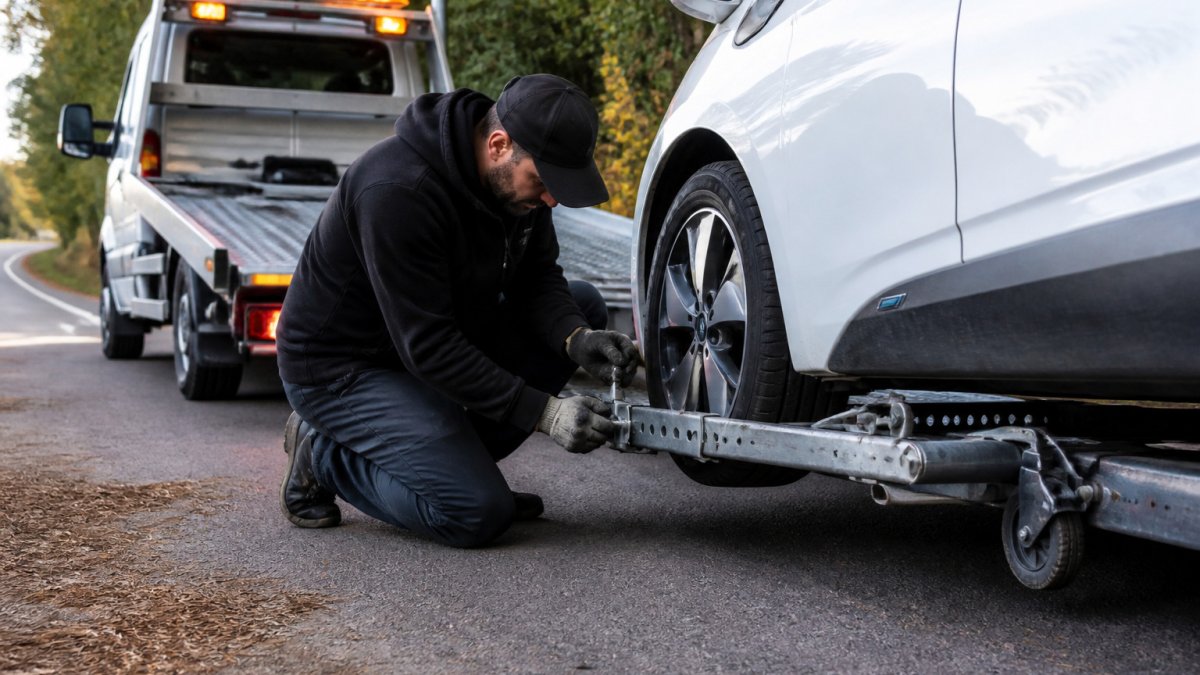
Collision towing often needs a flatbed because damaged wheels may not roll, and a winch may be required to load a vehicle that cannot be driven. Tell the dispatcher it is a collision so the right equipment and, if needed, a rotator for a heavy recovery, is sent.
Key Takeaway After a collision, your phone is your best witness. Photos of vehicle positions and damage taken before the tow can settle an insurance claim that would otherwise drag on for weeks.
Step 6: Rely on 24/7 Roadside Assistance in Oakville
24/7 roadside assistance in Oakville means help at 2 AM on a Sunday, not just during business hours. Breakdowns do not check the clock, and a provider that only answers during the day leaves you stranded on the QEW at midnight.
What genuine 24/7 coverage includes:
Battery boosting for a dead battery
Fuel delivery if you run dry
Lockout assistance when keys are locked inside
Flat tire changes
Winching out of a ditch or snowbank
Long-distance towing if you need the vehicle taken well beyond the local area
Roadside assistance and towing are not the same service. A boost or a tire change can get you moving again without a tow, which saves you money.
SJ's Towing runs 24/7 out of Oakville and the surrounding corridor, so a dead battery at 2 AM gets the same response as a midday call. Our family-run team treats every vehicle as if it were our own.
Step 7: Know What to Expect While You Wait
Realistic response-time expectations keep you calm and safe while you wait. A local provider working the Oakville and Hamilton corridor can often reach you quickly, but traffic, weather, and highway closures affect every company equally. No one can promise an exact minute, and any provider that guarantees a fixed arrival time regardless of conditions is overselling. Ask dispatch for an estimate and treat it as an estimate, not a guarantee.
Factors that affect arrival time:
Time of day. Rush hour on the QEW or Highway 403 can double a short drive.
Weather. Snow, ice, and heavy rain slow every truck and increase call volume.
Your location. A highway shoulder is faster to reach than an underground parkade or a back road.
Truck availability. If you need a flatbed and the nearest one is already on a call, a second truck must be dispatched.
Access. Gated communities, parkades with height restrictions, and blocked driveways add time.
While you wait, follow this safety checklist:
Stay behind the barrier, not in the car, on a highway.
Keep your hazard lights on so the driver can spot you.
Keep your phone charged and stay reachable.
Watch for the truck and confirm the company name before you approach.
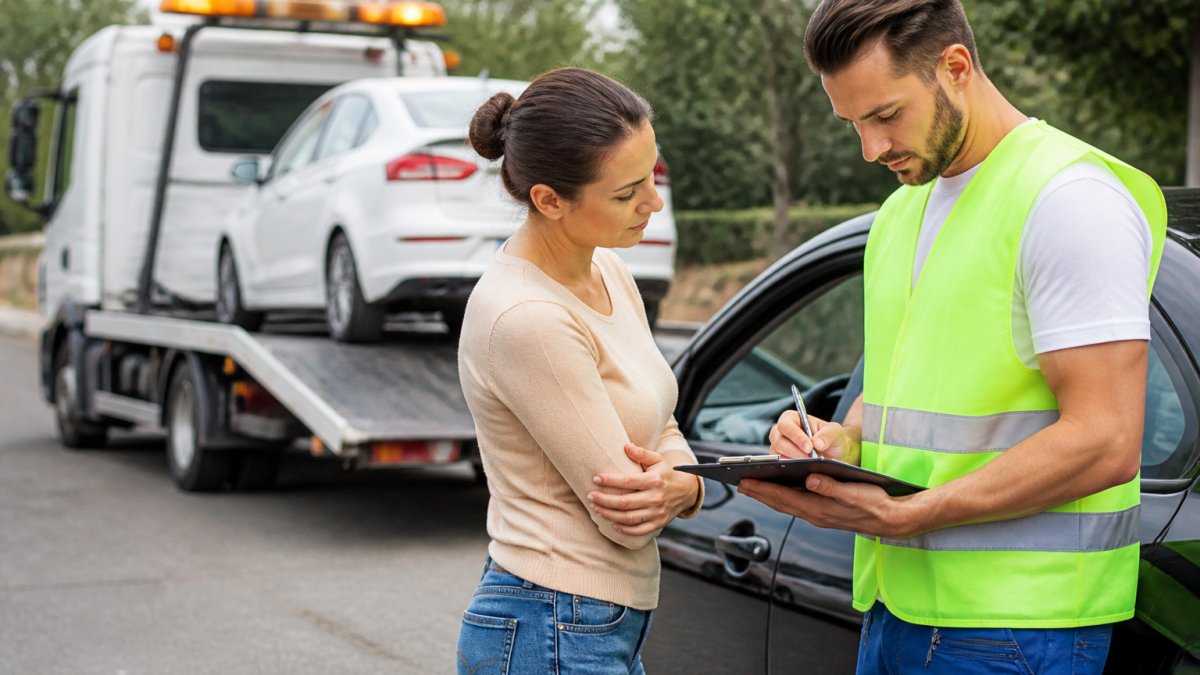
Ask the driver for identification and the job details before the vehicle is loaded.
If you are on a quiet street rather than a highway, waiting in the car with doors locked is reasonable. On a 400-series highway, it is not.
When the driver calls, be ready to confirm these details so loading goes quickly:
Your exact position, including the nearest exit or kilometre marker.
Whether the vehicle rolls, steers, or is locked in Park.
Any damage that affects how the vehicle must be loaded.
Where you want it taken, with the full address.
Whether any passengers have mobility needs that require extra time.
Best For Drivers on the QEW, Highway 403, and Highway 407 corridor who need a provider that answers at any hour and quotes clearly before dispatch.
Conclusion: Get Emergency Towing Service in Oakville Without the Guesswork
A breakdown is stressful enough without wondering whether help will actually show. The difference between a smooth recovery and a nightmare is preparation: know your location, ask about pricing up front, and call a provider that operates around the clock. SJ's Towing offers 24/7 service, fast and on-time response, and affordable rates across Oakville and the surrounding area. Our family-run team treats your vehicle with care. Get a quote from SJ's Towing and get back on the road without the guesswork.
Frequently Asked Questions
Is towing covered by insurance in Ontario?
Coverage depends on your policy. Many auto insurance policies in Ontario include towing as an optional endorsement, and some roadside assistance memberships cover it separately. Check your policy documents or call your insurer before you need a tow. If you have coverage, keep your policy number handy so the towing provider can bill your insurer directly or give you a receipt to submit for reimbursement.
What information do I need to provide when calling for a tow?
Have your exact location ready, including the nearest cross street, highway exit number, or a landmark. Tell dispatch your vehicle type, make, model, and whether it is drivable. Mention if the keys are available, if the vehicle is in a parking garage or underground lot, and whether anyone is still inside. Clear details help the emergency towing provider send the right truck and arrive faster.
How long does it usually take for a tow truck to arrive?
Response times vary by location, traffic, and weather. In urban areas like Oakville, many providers aim to arrive within 20 to 45 minutes, but highway collisions or peak commuter hours can extend that. When you call, ask for an estimated arrival window and request a text or call when the driver is close. If the wait exceeds the estimate, call back to confirm the truck is still assigned.
How much does emergency towing cost in the Oakville area?
Pricing depends on distance, vehicle type, time of day, and whether special equipment like a flatbed or rotator is needed. Most providers charge a base hook-up fee plus a per-kilometer rate. Ask for a full quote before the truck arrives, including any after-hours or winch recovery charges. SJ's Towing offers affordable rates and can provide a clear quote when you call.
GET A QUOTE
Comments